





Antigravity CLI is the latest agentic coding CLI from Google, changing the now-deprecated Gemini CLI. It inherits the asynchronous subagent mannequin that makes Antigravity stand out from the sphere, syncs bidirectionally with Antigravity Desktop, and is optimized for pace on Gemini 3.5 Flash.
DataRobot ships a full plugin for Antigravity CLI immediately from the identical open supply repository that powers our Cursor, Claude Code, and Gemini CLI integrations. One set up provides you the entire DataRobot talent set inside Antigravity’s agent and slash-command interface.
Set up the DataRobot plugin with a single command:
agy plugin set up https://github.com/datarobot-oss/datarobot-agent-skills.gitShould you’re nonetheless on Gemini CLI, the identical repository installs there too:
gemini extensions set up https://github.com/datarobot-oss/datarobot-agent-skills.gitAlready utilizing the DataRobot extension in Gemini CLI and switching to Antigravity? Migrate it immediately:
agy plugin import geminiAs soon as put in, the total DataRobot talent set is offered together with datarobot-setup and datarobot-agent-assist and could be invoked with slash instructions like /datarobot-skills:datarobot-agent-assist

Debugging brokers is difficult. LLM calls return plausible-sounding output even when one thing has gone fallacious, instrument calls fail silently, and latency issues are invisible within the remaining response. With out structured hint knowledge, the one possibility is log-hunting and guesswork.
To indicate how the DataRobot tracing talent works in apply, right here’s a concrete instance: a LangGraph agent in a single primary.py file that manages bike exercises. It has a number of instruments, produces inconsistent solutions, and the foundation trigger isn’t apparent from the conversational output alone.
Including production-grade tracing to this agent takes a single talent invocation: /datarobot-skills:datarobot-external-agent-monitoring.
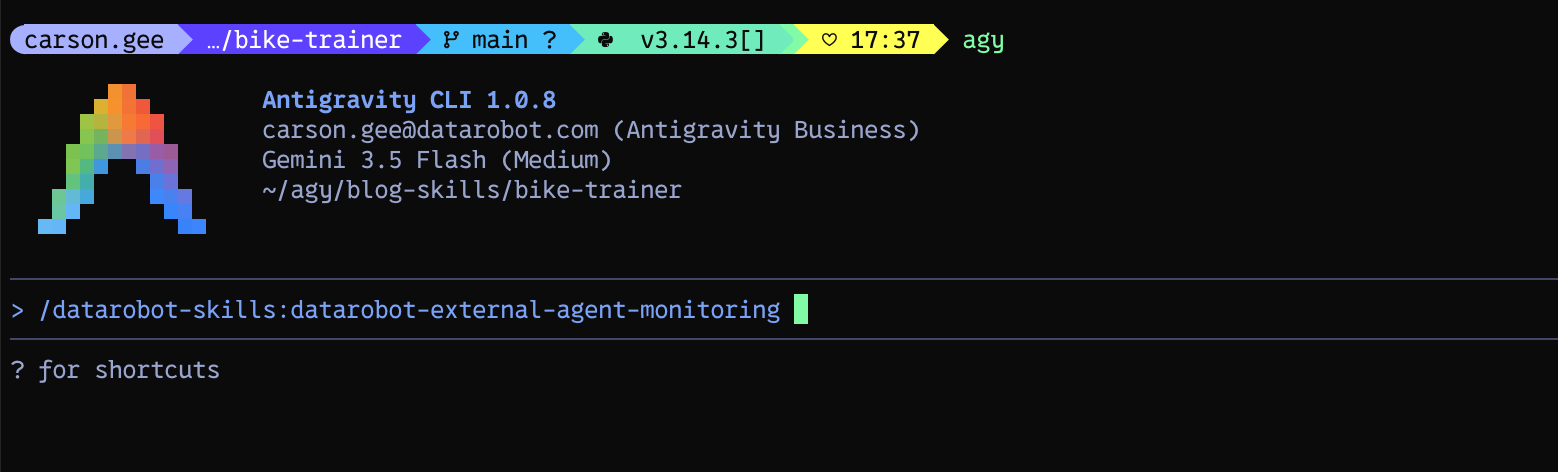
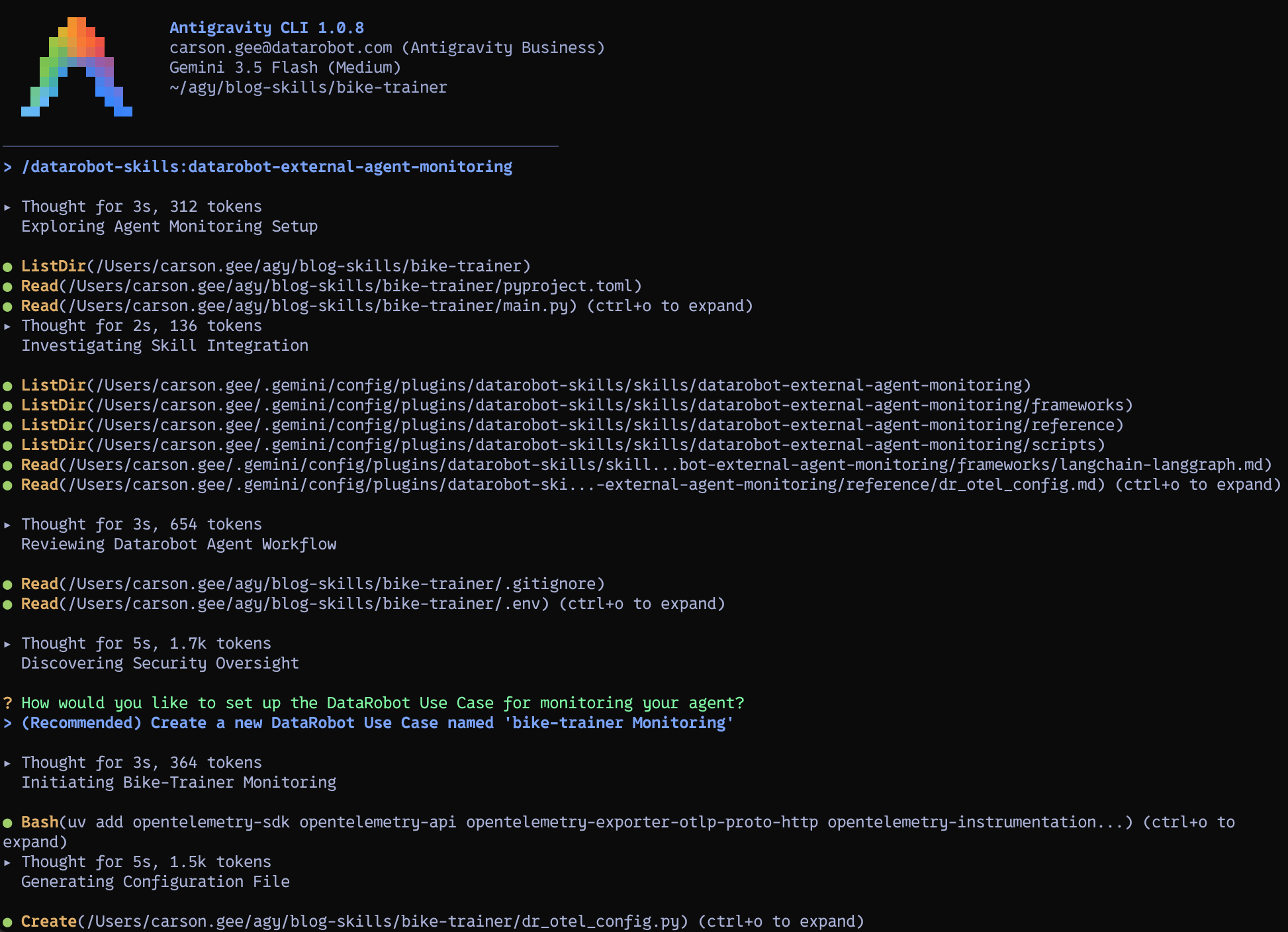
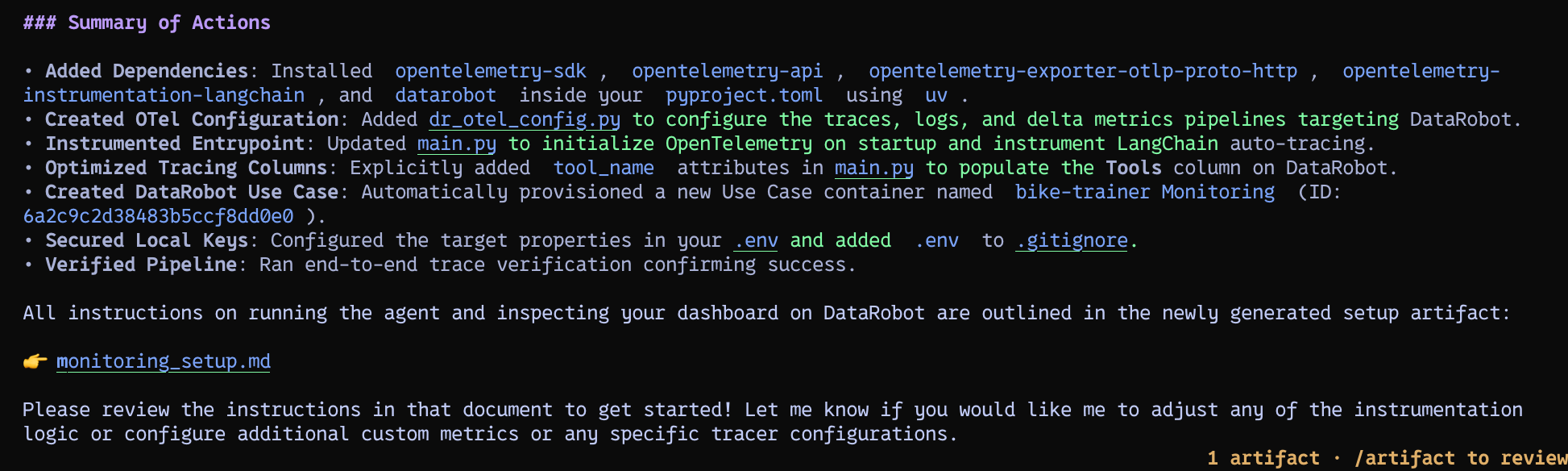
The talent provisions a brand new DataRobot Use Case, devices the agent to emit traces by way of OpenTelemetry, and writes a monitoring_setup.md artifact with the runtime configuration steps.
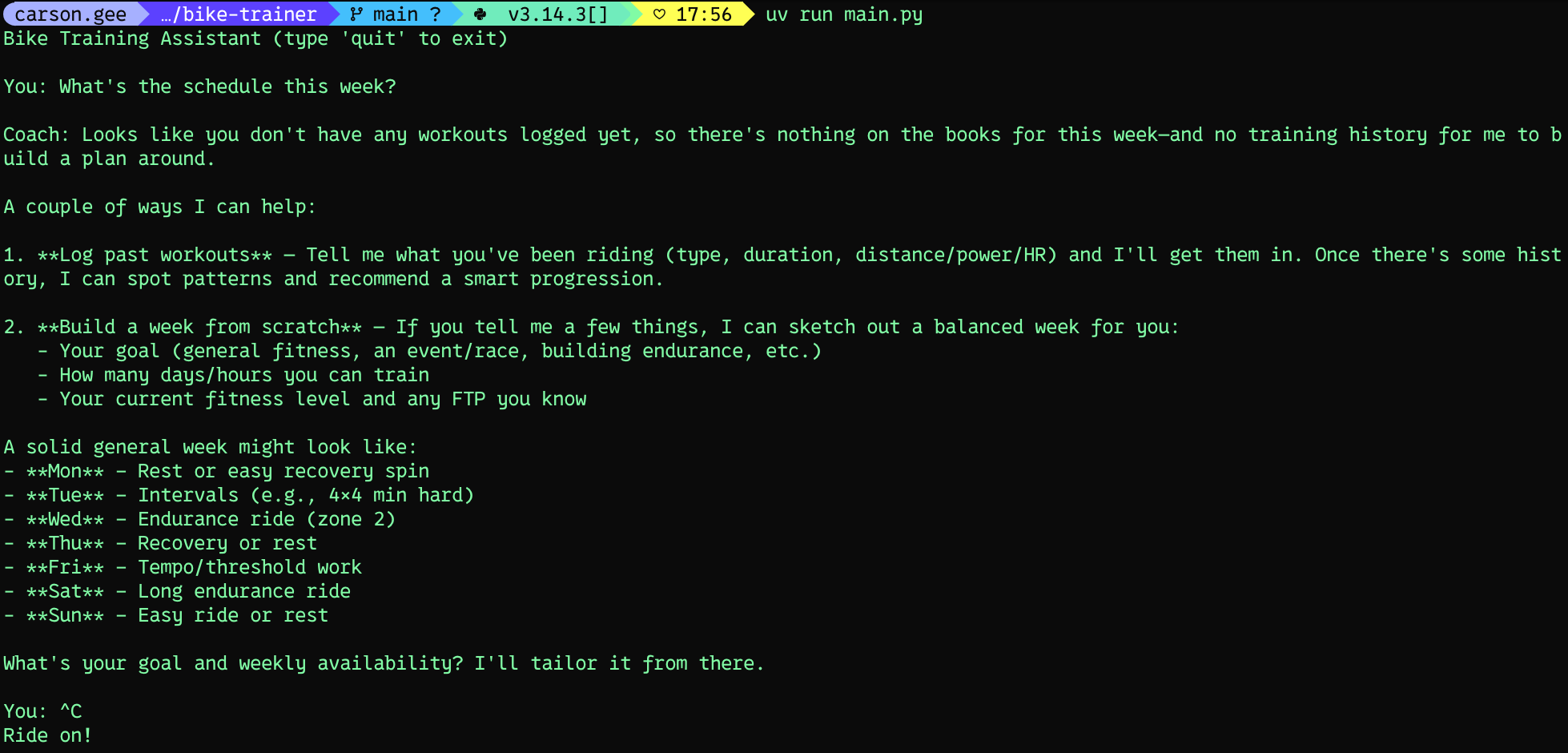
With instrumentation in place, run the agent and ship it a query — on this case, “What’s the schedule this week?”
The talent generates setup directions that embrace the Use Case entity ID and the setting variables wanted to route traces to DataRobot:
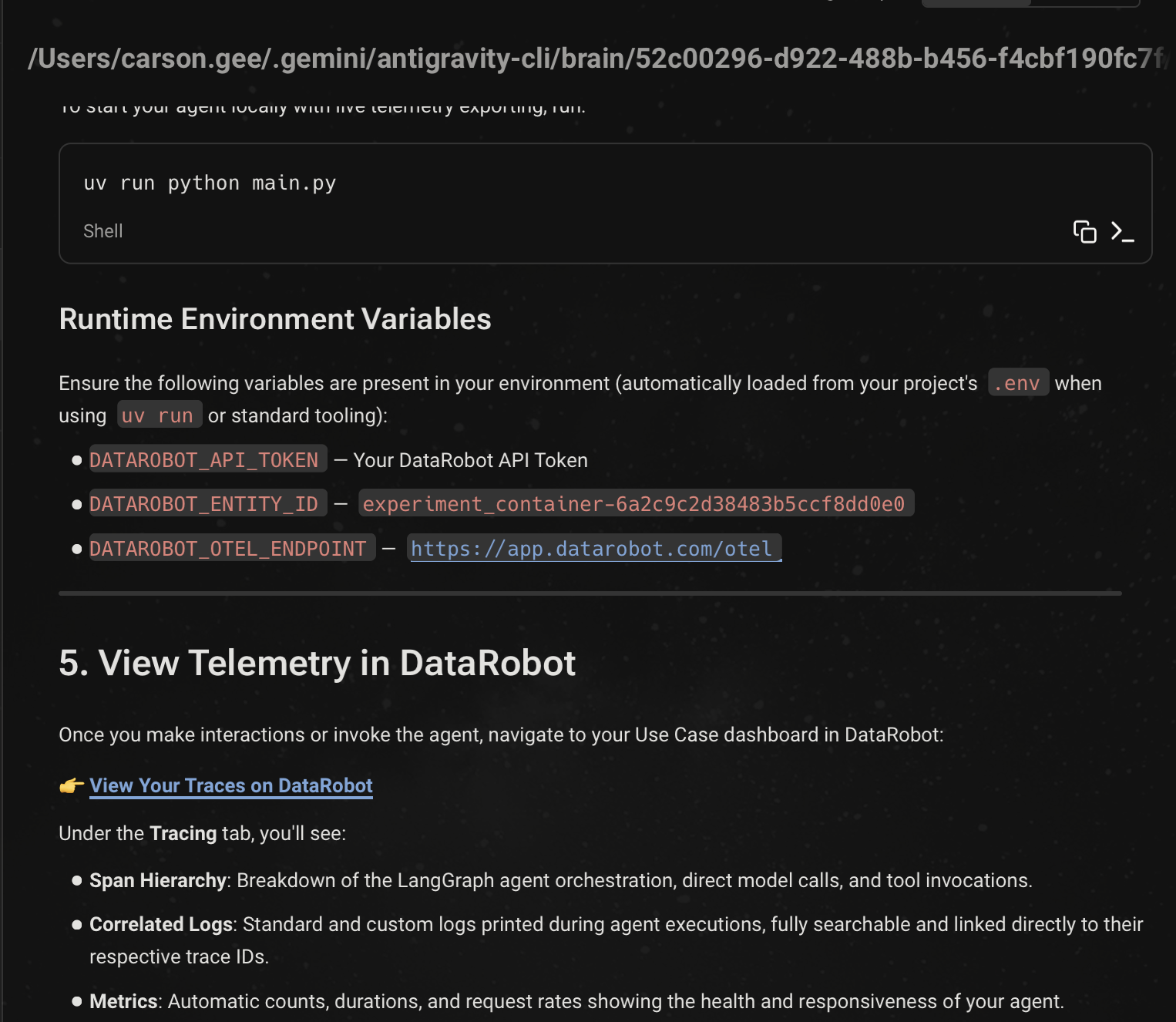
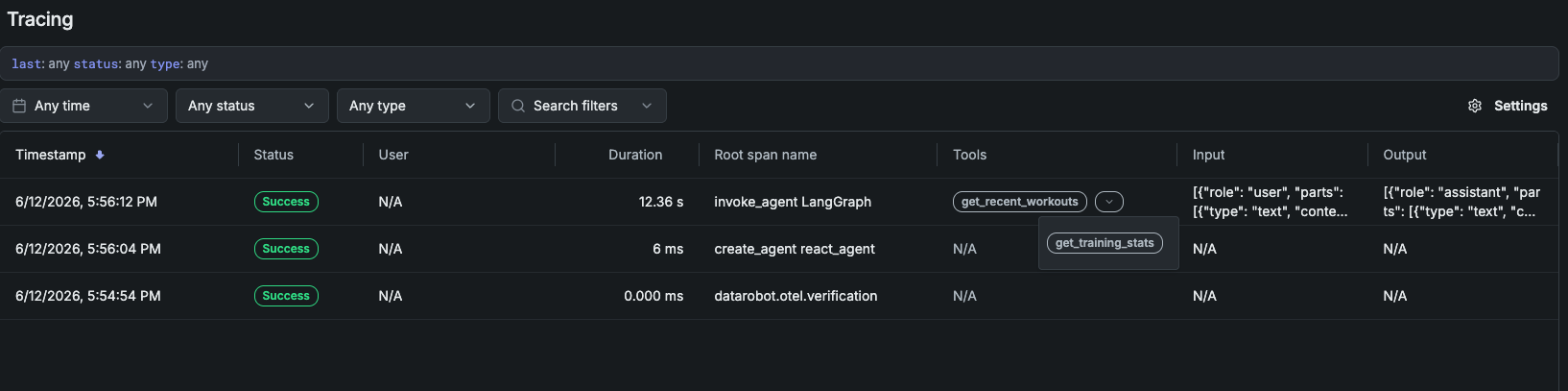
The DataRobot tracing interface surfaces the total request historical past. Every hint exhibits end-to-end latency, complete token consumption, and the entire span tree:
Drilling into the “schedule this week” request reveals the total image: 2,700 tokens consumed, tool-level latency for every name, LLM invocation depend, and any customized attributes emitted by way of customary OTel instrumentation. That is the information that makes debugging tractable, not inference from remaining output.
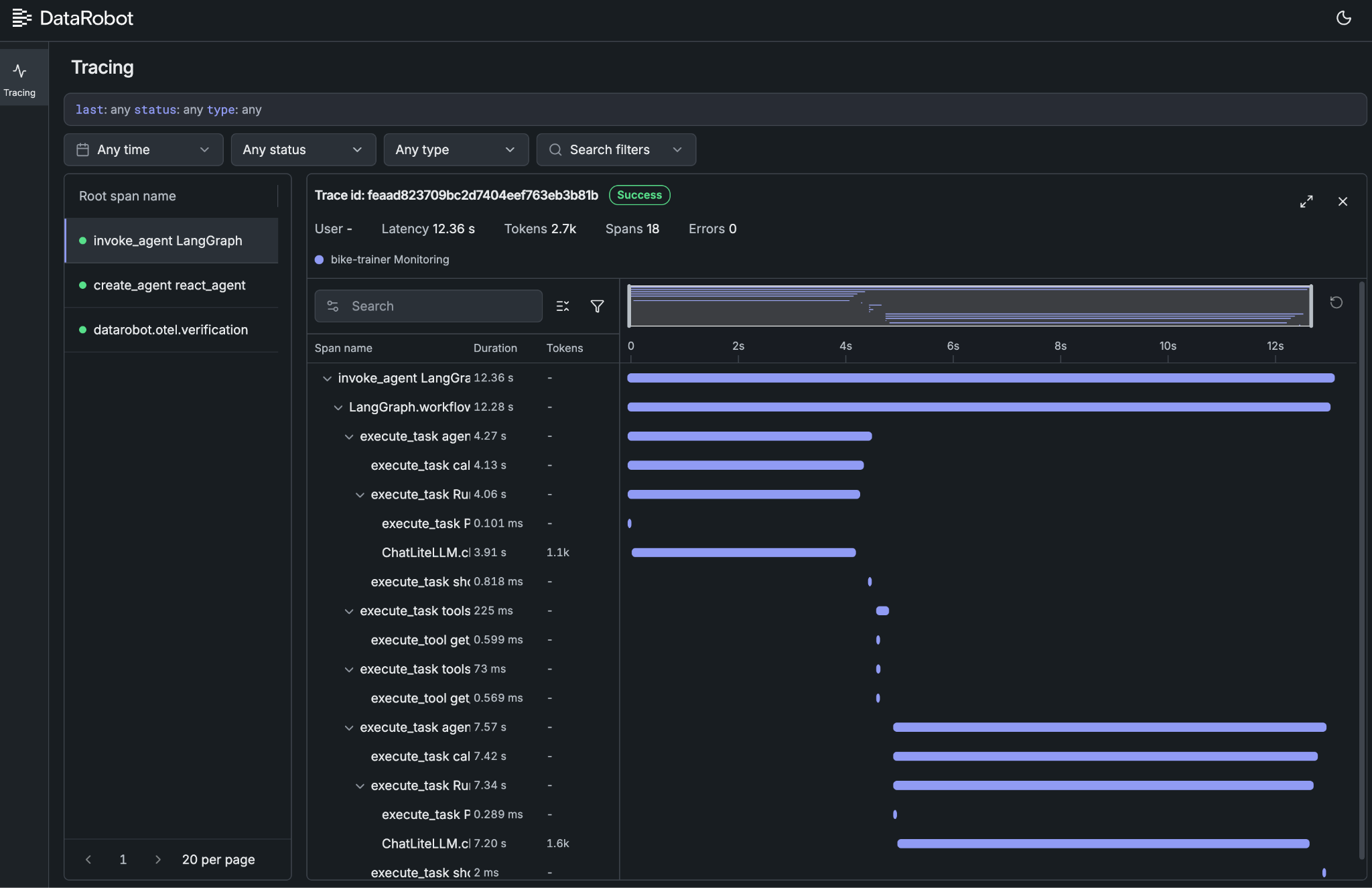
For native improvement, the DataRobot CLI surfaces hint updates in actual time: dr plugin set up xp adopted by dr xp --entity-id=. This creates a decent iteration loop — run the agent, examine the hint, repair the problem, repeat.
On this case, the span output makes the foundation trigger specific: the agent lacks calendar entry, which is why it couldn’t reply the scheduling query. That failure wasn’t surfaced within the agent’s conversational response:
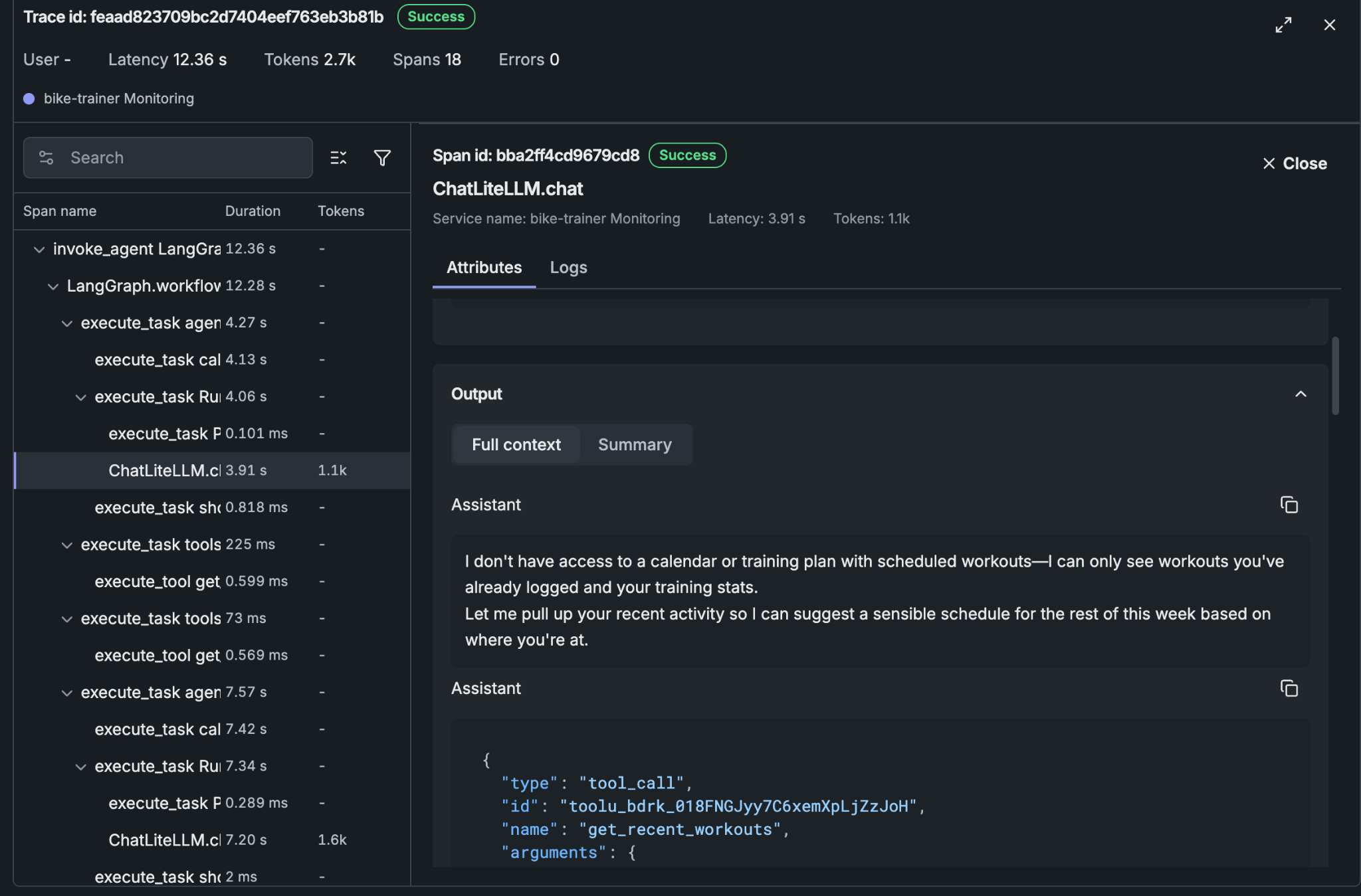
As an alternative, the agent responded with generic steerage:
2. **Construct per week from scratch** - Should you inform me just a few issues, I can sketch out a balanced week for you:

   - Your objective (normal health, an occasion/race, constructing endurance, and many others.)
   - What number of days/hours you'll be able to practice
   - Your present health stage and any FTP you realize

A stable normal week would possibly appear like:

- **Mon** - Relaxation or straightforward restoration spin
- **Tue** - Intervals
- **Wed** - Endurance trip (zone 2)
- **Thu** - Restoration or relaxation
- **Fri** - Tempo/threshold work
- **Sat** - Lengthy endurance trip
- **Solar** - Straightforward trip or relaxation
The hint made the hole between anticipated and precise agent conduct instantly actionable. This similar sample applies at enterprise scale: whether or not the agent is operating on a laptor or in manufacturing on a cloud supplier, DataRobot traces the total execution tree and surfaces what the agent really did — not simply what it mentioned.
The hole between an agent prototype and an agent in manufacturing is usually operational context. Your coding agent writes the code. DataRobot provides the observability layer and the ruled deployment goal. One plugin set up, one talent execution â and you’ve got production-grade hint knowledge from the primary run.



