


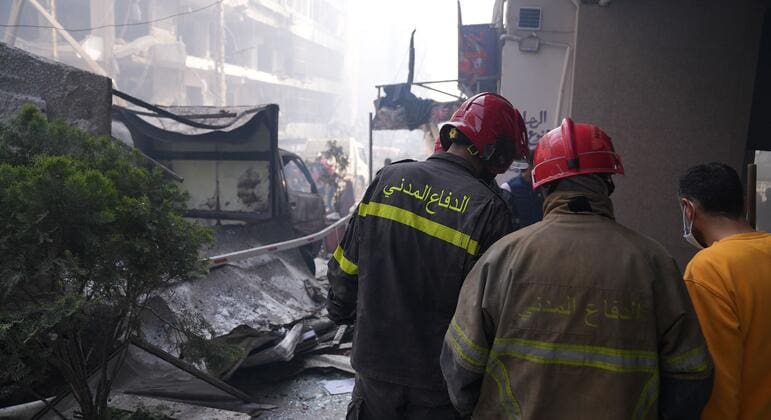
WHO Consultant in Lebanon Dr. Abdinasir Abubakar spoke to UN Information from Beirut and stated that Wednesday marked “one of many deadliest single days within the present escalation of violence” within the nation.
In simply minutes, a number of strikes hit densely populated areas, together with the capital, Beirut, in the midst of the working day.
“In simply 10 minutes, yesterday afternoon, explosions struck a number of places, together with densely populated civilian areas within the capital, Beirut,” he stated, describing scenes of panic as civilians went about their each day lives with out warning.
The assaults resulted in numerous civilian casualties. “The interim evaluation is reporting…over 200 deaths and over 1,000 accidents. Amongst them, girls and youngsters,” Dr. Abubakar stated, including that first responders and healthcare staff had been additionally among the many useless and injured, with many victims nonetheless trapped beneath the rubble.
Reflecting on the dimensions of the assault, he described it as “horrific, very unhappy, is alarming”, recounting how he witnessed a number of strikes from his workplace in Beirut. “I may see in my window, really, 10 completely different strikes in entrance of me, and buildings collapsing.”
Hospitals pushed to the brink
Hospitals throughout the nation have been pushed to the brink.
Emergency departments and trauma providers are overwhelmed by the dimensions of accidents, whereas shortages of vital provides are compounding the disaster. “Hospitals even have issued an pressing name” to plug the gaps, he stated, noting that mass casualty protocols have been activated nationwide.
Unidentified our bodies
“Hospitals proceed to obtain reviews of the unidentified our bodies, and physique components which have been recovered”, Dr Abubakar stated, highlighting the devastation scale of the assault.
The stress on the well being system is additional intensified by ongoing assaults on healthcare. Because the escalation started, dozens of healthcare staff have been killed and lots of extra injured.
“Many of those healthcare staff had been displaced themselves as a result of they’ve been affected by the battle and lots of the healthcare assaults that occurred within the final 40 days, killed over 50 healthcare staffand have wounded over 150 healthcare staff”, he added.
Restricted entry
Such assaults not solely price lives but in addition restrict entry to look after these in want. “While you kill healthcare staff and first responders…the top level is that you simply don’t have first responders and ambulances,” Dr Abubakar warned, highlighting the broader influence on already susceptible communities.
WHO and its companions are working carefully with Lebanon’s Ministry of Well being to supply assist, together with medical provides, technical help and funding. Nevertheless, sources are quickly being depleted.
“We now have already consumed many of the accessible shares within the final 40 days, however extra so, what occurred within the final 24 hours,” he stated.
Companions with assist from the OCHA-managed Lebanon Humanitarian Fund present displaced individuals with mobility aids in shelters in North Lebanon.
Attraction for worldwide assist
Efforts to replenish provides are additionally being hampered by logistical challenges, together with restricted transport choices into the nation. “We actually have to supply out completely different choices, how we are able to transport provides,” he added.
Regardless of the challenges, the well being system continues to perform below immense pressure. “We are attempting our greatest to serve the individuals, and to save lots of lives. But in addition, that humanitarian help will depend upon the accessible sources that the humanitarian companions are receiving,” Dr Abubakar stated.
With wants rising sharply, WHO has issued an pressing attraction for worldwide assist.
“We actually want pressing sources and funds for us to proceed, helping these people who find themselves in want,” he stated, warning that with out extra funding, life-saving operations could possibly be in danger.

